
Methodology
How Clonar assesses resistance to diseases
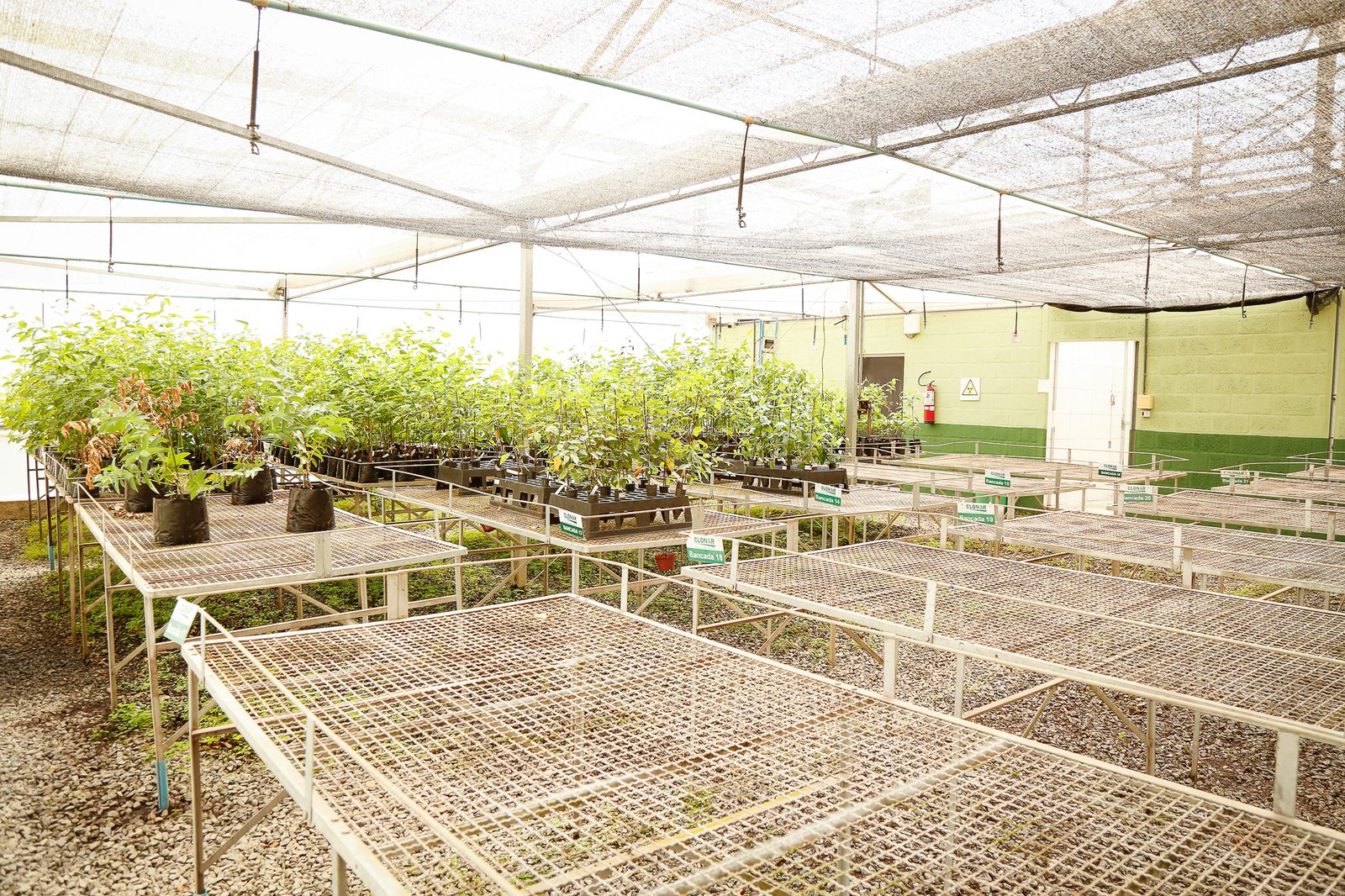
A phenotyping result is only worth something if it can be repeated. That is why every trial reproduces the three conditions of disease, controls what can vary and records what was done, from the isolate used to the greenhouse temperature.
The principle
Without the three conditions there is no disease—and the trial tells nothing apart
For a reliable resistance assessment, all the conditions required for disease to occur must be present at the same time: a healthy plant, an aggressive pathogen and an environment favorable to infection.
- Healthy host: seedlings standardized for age, size and health, so that the difference observed is genetic.
- Aggressive pathogen: isolates from the collection with confirmed pathogenicity and known aggressiveness.
- Favorable environment: temperature, humidity and wetness period adjusted to each pathogen.
The steps
Six steps, each with its own control
What changes from one disease to another is the protocol of each step. The logic is always the same.
Choice of isolates
By origin, host and aggressiveness documented in the collection. For clones going to several regions, more than one isolate.
Control: isolate code recorded in the reportSeedling standardization
Healthy seedlings of the same age and size, acclimated before inoculation.
Control: off-standard plants discardedRandomization and replicates
Clones and control clones randomly assigned within blocks, so that differences in light and humidity across the greenhouse are not confounded with genetics.
Control: trial map archivedInoculum prepared and quantified
Method suited to each pathogen—in the wood, in the soil or on the foliage—with concentration checked on the day.
Control: inoculum batch and concentrationEnvironment favorable to infection
Temperature, humidity and wetness period adjusted to the pathogen, recorded throughout the trial.
Control: continuous environmental recordMeasurement, analysis and report
Standardized scales and direct measurements, trained raters, statistical analysis and classification of each clone.
Control: check clones validate the trialDesign
Why we randomize the position of every plant
Inside a greenhouse, light, temperature and humidity vary from one bench to another. If clone A always sat in the dampest corner, its disease would come from the corner, not from its genetics.
- Blocks: each block contains every clone in the trial, once.
- Randomization: the position of each clone within the block is randomized.
- Controls: one clone known to be resistant and one known to be susceptible in every block. If the susceptible control does not become diseased, the trial is invalid and is repeated.
Illustration of the principle, with 6 clones and 4 blocks. The number of clones, blocks and plants per plot is defined in each proposal.
Rating scale · rust example
A score that any trained rater can repeat
For leaf diseases, assessment uses rating scales with an objective description of each class. Choose a score to see the corresponding symptom and classification.
Illustrative 0–4 scale for eucalyptus rust (Austropuccinia psidii), adapted from Junghans et al. (2003), Theoretical and Applied Genetics.
From measurement to classification
How a number becomes "resistant"
1. Measurement
Lesion length in the wood, percentage of leaf area affected, wilt incidence or scale score, depending on the disease.
2. Statistical analysis
Means per clone, variability among replicates and comparison with the controls of the same trial.
3. Classification
Each clone is classified as resistant, tolerant or susceptible relative to the controls, with a recommendation for the program.
Reproducibility
What is recorded in every trial
So that another laboratory, or the same one a year later, arrives at the same result.
- Code, origin and history of each isolate used
- Inoculum batch and concentration on the day of inoculation
- Trial map with the randomized position of each plant
- Temperature and humidity throughout incubation
- Assessment dates, raters and photos per clone
Next step
Want to discuss the protocol before contracting?
The technical team presents the trial design to your breeding team and adjusts the protocol to the program's question.
or write to comercialclonar@gmail.com